

Key Takeaways
- Laws concerning data protection in Malaysia have become much stricter since the 2024 PDPA updates, bringing in new duties for reporting data leaks, appointing Data Protection Officers, and controlling data sent overseas.
- Most business owners think their IT teams handle the rules, but the gap between what you think is happening and what is actually done is where data leaks happen.
- Choosing your options for cloud storage within Malaysia carefully shapes your legal safety, as different cloud setups handle where data lives in unique ways.
- Disaster recovery plans need real testing, not just paperwork; an untested plan is practically useless when things go wrong.
- Asking your IT team five simple questions will show you your real risks before a government checker or a hacker finds them.

Introduction
A majority of Malaysian business leaders believe they have their data secured. They hire IT staff, use passwords, and use some digital tools backed by local cloud storage in Malaysia, so they assume everything is fine. That blind assumption causes trouble.
The numbers prove the problem is already here. IBM’s 2024 Cost of a Data Breach Report, as reported by New Straits Times, reveals that ASEAN businesses reported an average breach cost of USD$3.23 million in 2024, a 6% increase compared to the previous year. The highest breach cost was found in the financial services sector, with an average breach cost of USD$5.57 million per incident.
The same report indicated that 16% of regional breaches were due to phishing, with an average cost of USD$3.39 million per incident. Meanwhile, 56% of organisations in ASEAN have already begun using AI and automation in their cybersecurity measures, with IBM reporting that they reduced the lifecycle of breaches by 99 days and cut average breach costs by USD$1.42 million.
Malaysia’s laws have evolved rapidly, with the National Cybersecurity Act 2024 and PDPA reforms introducing stricter breach notifications, cross-border data transfer controls, and DPO requirements. This makes decisions around cloud storage in Malaysia, disaster recovery, vendor access, and breach response critical for managing compliance risks.
What is Data Protection Malaysia?
Data protection in Malaysia is governed primarily by the Personal Data Protection Act 2010 (Act 709), enforced by the Department of Personal Data Protection (JPDP). The Act applies to any company or individual processing personal data in commercial transactions within Malaysia.
The PDPA establishes seven core principles covering:
- Consent
- Purpose limitation
- Disclosure
- Security
- Data retention
- Integrity
- Access rights
The 2024 amendments expanded these obligations further by introducing:
- Mandatory breach notification requirements
- Formal Data Protection Officer (DPO) appointments for certain organisations
- Stronger controls on cross-border personal data transfers
Non-compliance can lead to:
- Financial penalties
- Potential imprisonment for senior officers
Under Malaysia’s PDPA, the term “processing” has a very broad meaning. It includes:
- Collecting
- Recording
- Storing
- Adapting
- Retrieving
- Using
- Disclosing
- Erasing personal data
In practice, this means that almost any business handling customer or employee information is considered a data controller under the law and falls within the scope of PDPA obligations.
The Five Questions Every Business Leader Should Ask Their IT Team
1. Do we have a Data Protection Officer, and what does that person actually do?
The 2024 PDPA amendments also provided DPO appointments for specific categories of data controllers. Even if a business is not yet obliged to do so under law, identifying a specific individual accountable for the compliance with data protection rules is likely one of the initial checks regulators would conduct during an investigation.
A common mistake is assuming that:
- “Everyone is responsible for data protection”
- Or that “the IT manager handles it as part of their role”
In practice, that usually means there is no real DPO structure in place, only an assumption that someone will deal with compliance issues if they arise.
The role of a DPO is a specific operational function involving:
- Reviewing data processing activities
- Handling breach assessments
- Coordinating with the JPDP
- Advising on systems that process personal data
- Monitoring compliance obligations internally
This is not a minor administrative task added casually onto an existing workload. It is a time-consuming responsibility requiring ongoing oversight and documentation.
Businesses processing large volumes of sensitive personal data, including:
- Health records
- Financial information
- Employment records for large workforces
may fall under categories where appointing a DPO is no longer optional under the amended PDPA.
For businesses outside those categories, appointing a DPO remains a strong best practice and signals to regulators that the company takes data protection obligations seriously.
2) Where is our data actually stored, and does cloud storage Malaysia keep it within the country?
The question is probably one of the most misunderstood in the Malaysian business environment today. Most companies just think that when they subscribe to a cloud storage service, their data automatically rests in Malaysia. What they don’t realise is that the data could be resting in Singapore, the USA, or in multiple locations simultaneously at any point in time. The decision is made based on the provider, plan subscription, and the setup of your system.
Under the 2024 PDPA amendments, cross-border personal data transfers now require additional safeguards. Businesses must verify that:
- The destination country has adequate data protection laws
- Appropriate safeguards and controls are in place for transferred data
If your IT team cannot clearly explain:
- Where customer data is physically stored
- Which cloud region is being used
- Whether backups or replications cross borders
then that is already a compliance concern.
AWS now operates in Malaysia, which allows businesses to keep data within the country when configured correctly. However, this is not something that happens automatically through default settings. Choosing the correct region, backup structure, and access configuration is a deliberate setup decision that must be documented properly.
Cloud storage decisions made during the early setup stage often shape a company’s compliance posture for years afterwards.
3. What Does Our Disaster Recovery Plan Cover, and When Was It Last Tested?
Most businesses write down a disaster recovery plan, but companies rarely test those plans under real stress, like a late-night ransomware attack or a sudden server crash.
The PDPA does not prescribe a fixed disaster recovery architecture. However, the Act’s security principle requires organisations to take practical steps to prevent:
- Unauthorised access
- Data loss
- Destruction of personal data
An untested disaster recovery plan does not properly satisfy that obligation.
Business leaders should ask their IT teams:
- When was the last full recovery test conducted?
- How long did the recovery process take?
- What data gaps or operational issues were discovered during testing?
If the team cannot answer these questions clearly, especially the date of the most recent test, that usually signals a weakness in the recovery process itself.
A credible disaster recovery plan should include:
- Recovery Time Objectives (RTOs)
- Recovery Point Objectives (RPOs)
- Documented test logs with dates, outcomes, and identified issues
Without regular testing, a disaster recovery plan often becomes a document that looks reassuring on paper but fails under real operational pressure.
4. How do we handle a data breach in the first 72 hours?
With the PDPA amendments coming into force in 2024 in Malaysia, the requirement for breach notification now becomes mandatory. The precise period to which the JPDP must be notified is being further clarified in subsidiary legislation and official guidelines, but the path forward seems clear: the approach is toward a rapid and structured notification response akin to the 72-hour breach notification provisions of the European Union’s GDPR.
Businesses can no longer afford to merely focus on preventive measures; instead, they must develop plans to respond rapidly and efficiently when a breach does inevitably occur.
Business leaders should ask their IT teams to explain exactly what happens in the first few hours after a breach is discovered:
- Who is notified internally first?
- Who has the authority to isolate or shut down affected systems?
- Who prepares the notification to the regulator?
- Who communicates with affected customers or employees?
If these answers are unclear or involve hesitation, the incident response plan is likely incomplete.
Cyber security in Malaysia has shifted firmly toward response readiness. Regulators now expect organisations to demonstrate:
- Clear escalation procedures
- Defined decision-making responsibilities
- Documented breach response processes
- The operational ability to act quickly during an incident
Prevention still matters, but the JPDP increasingly expects businesses to prove they can respond effectively when prevention fails.
5. Which third-party vendors have access to our data, and what agreements govern that access?
Many major data breaches do not originate from direct attacks on a company’s internal systems. Instead, they often come through:
- Vendors
- Contractors
- External service providers
- Third-party software integrations
These parties are frequently granted access to internal systems or sensitive data, but their permissions are not always reviewed, monitored, or revoked properly over time.
Under Malaysia’s PDPA, businesses remain responsible for personal data even when a third party processes that data on their behalf. This means external providers still fall within the company’s compliance responsibility.
Examples include:
- Payroll providers
- CRM vendors
- Cloud infrastructure partners
- IT support and managed service companies
Business leaders should ask their IT and compliance teams:
- Which vendors currently have access to company data?
- What level of access do they have?
- Where is that data stored?
- How is vendor access monitored or reviewed?
Most importantly, each vendor relationship should be governed by a formal data processing agreement (DPA). These agreements should clearly define:
- What the vendor is permitted to do with the data?
- Where the data can be stored?
- What security controls are required?
- What happens if the vendor experiences a breach or security incident?
Without clear contractual controls, businesses may discover too late that third-party access created risks far beyond what management originally assumed.
How Cloud Infrastructure Choices Shape Your Compliance?
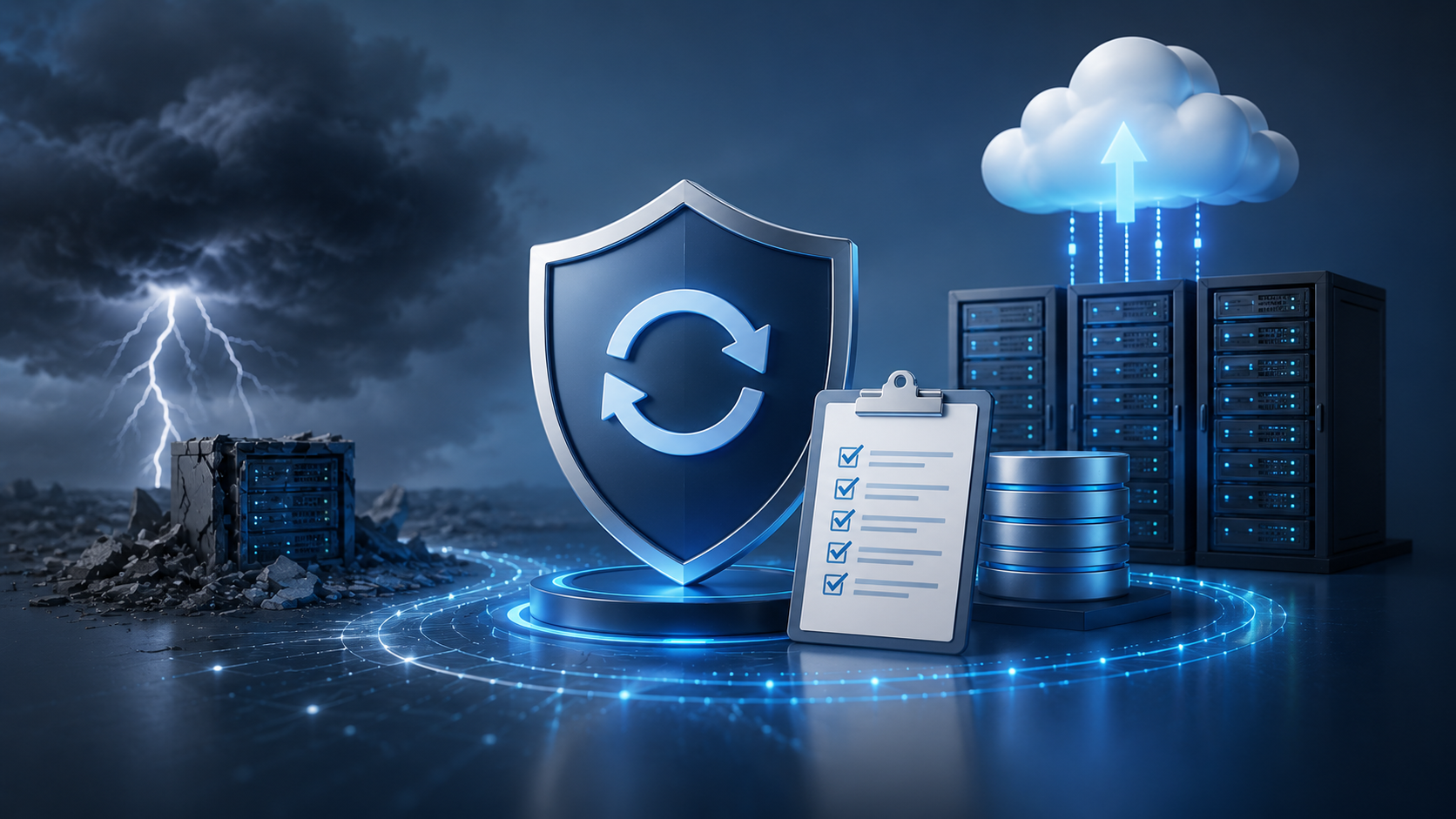
Choosing the right cloud infrastructure is not simply an IT decision. It is a compliance and business risk decision that directly affects how a company handles personal data under Malaysia’s PDPA.
The launch of the Malaysian AWS Region in 2024 gave businesses the option to keep data within Malaysia’s borders. This is especially important for industries where data residency requirements are often strict and clearly regulated, such as:
- Banking
- Healthcare
- Government-linked services
Beyond data residency, cloud infrastructure choices also determine:
- Who can access the data
- How information is encrypted
- How audit logs are maintained
- Whether access activity can be monitored and reviewed
These factors are directly tied to the PDPA’s security principle.
Businesses that are operating with properly implemented cloud solutions generally have easier access to producing the required compliance records, access logs and evidence of security activity.
Unmanaged and unconfigured cloud systems are quite the opposite and will result in transparency gaps that become significant issues during audits, investigations, or even during security breaches.
Cloud storage Malaysia compliance is, therefore, not only about where the data is physically stored. It also depends on:
- Access control policies
- Encryption standards for stored and transmitted data
- The ability to track and review access activity at any time
These technical decisions ultimately shape how defensible a company’s compliance posture is under regulatory scrutiny.
Is My Business Meeting Data Protection Malaysia Standards?
Documentation of your processing activity and the basis of processing is kept updated; a PDPA compliance owner has been appointed; your infrastructure, both on-premises and in the cloud, is capable of having access control, encryption, and breach detection capabilities; and you have a tested incident response plan with identified owners.
FAQs
1. Who is bound by the PDPA of Malaysia?
The Personal Data Protection Act 2010 applies to any person (including an individual, company and organisation) processing personal data in relation to commercial transactions within Malaysia, no matter the business size.
2. What are the data protection Malaysia penalties for non-compliance?
The PDPA imposes penalties for offences such as up to RM500,000, up to 3 years in jail, and penalties for failing to report leaks to the JPDP.
3. Will cloud storage automatically keep data local in Malaysia?
Not on its own. It depends on picking and setting up local cloud regions, like the AWS Asia Pacific (Malaysia) Region, to stop data from copying across borders.
4. What is disaster recovery and why is it important for data compliance?
Disaster recovery is the plan to fix operations after cyber attacks or crashes, meeting the PDPA rule to keep personal data safe.
5. Am I required to have a Data Protection Officer in Malaysia?
Certain data handlers must name a DPO under the 2024 updates, but naming one is a smart move for all businesses using internal staff or outside help.

Conclusion
Following proper protocols for data protection in Malaysia requires written steps, practiced disaster recovery plans, trained people, and cloud setups that are ready for checks. VSTECS KU helps Malaysian businesses build strong daily operations through full cloud setup, cyber security in Malaysia, backups, and disaster recovery planning. As a leading distributor working with global tech giants, VSTECS KU helps companies match up safely with local laws.